"Wondering if your trees need thinning to grow their value?" NOV 26
Wondering if your trees need thinning to grow their value?
Thinning to waste in a forest or woodlot is just as important to realising its’ value as ensuring a farmer’s cull rams, ewes or cows are taken out of the breeding flock/herd. Just like the value and production of superior quality stock will yield a higher return per animal / hectare, culling trees can provide added value to the owners bottom line.
As a forest grows, all the trees within 10 – 30 meters are in competition with each other. This is highly beneficial in the first 5 to 10 years of the growth, as the competition encourages fast and straight apical growth as the trees strive to be taller and more indulged in sunlight than their competitors.
As the tree canopy closes, lower branches begin to die off due to neighbours blocking sunlight lower down. This all results in logs being longer, straighter and with smaller knots (branches). This is an important aspect of meeting the expectations of our domestic processors and New Zealand building regulations for timber strength.
So, if the above is true, why thin a forest or woodlot? It sounds like waste. Again, much like livestock, land can only grow so many healthy and high value trees before adding more units per hectare starts to hinder individuals from growing to their potential.
Initial planting is typically between 800 and 1200 stems per hectare. This stocking is important to give the trees initial good form, quick weed suppression, and the ability to sustain some mortality without affecting the overall crop. Depending on elements like soil type, rainfall, aspect and altitude, land can optimally produce a certain number of stems per hectare. Thinning is an important step in ensuring trees at maturity are of a stem size and quality to produce high value timber.
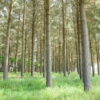
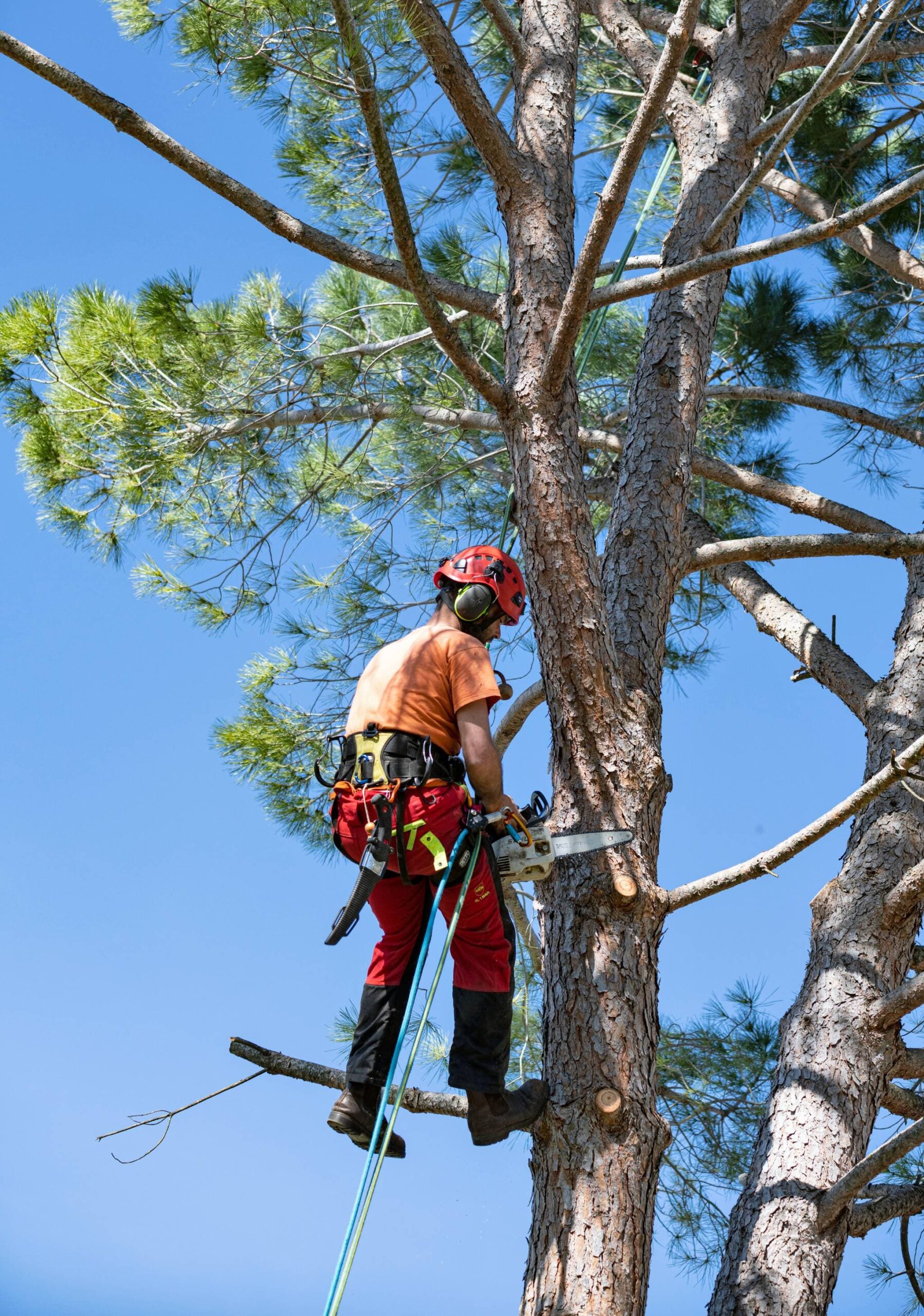
The thinning process involves the trees of lower value being felled or chemically poisoned. This allows the remaining higher value trees to maximise their access to water, soil nutrients and sunlight. The culled trees still add value to the forest as they decompose and return nutrients to the soil.
Less competition allows the selected remaining trees to grow a larger trunk diameter where sawmills are then able achieve higher yields and better quality timber – resulting in more $$ back to the owner. On a pure weight basis an un-thinned forest may have the same standing tonnage as a thinned one when harvested. The greater percentage of high value logs produced from the thinned forest is where the difference lies, and makes the cost of thinning a great return on investment.
Pruning and production thinning used to be commonplace practice in forests and woodlots but has become increasingly rare. Whilst current financial modelling often suggests a structural silvicultural regime (thinned to waste once with no pruning) will have the highest return on investment, this is not a certainty, nor a one size fits all.
The market in 20 years cannot be accurately predicted, and forest owners have different cashflow requirements. Just like a financial or farm advisor may suggest diversification, the same advice could be applied to forests; with species selection; pruning; thinning to waste and production thinning being the tools for these decisions within forestry.
For any forest or woodlot planted in 2021 or earlier, now is the time to consider options around thinning.
For your block to become the best investment it can be, please get in touch so we can help achieve this.